Your Fast Track to a Tech Career:
Transform from Any Background in 1 Year.

Your Fast Track to a Tech Career:
Transform from Any Background in 1 Year.
Application Timeline
February 2026 Full-Time Intake
Submit before 3 November 2025 (International) and by 15 November 2025 (Local)
August 2026 Full-Time Intake
Admissions commence on 1 October 2025
Submit before 15 April 2026
*The dates above are subjected to changes
The Graduate Diploma in Systems Analysis (GDipSA) is a one-year, full-time programme designed for:
Alternatively, you can take a stackable pathway through the Graduate Certificate Programme in Digital Solutions Development, a series of five certificates that can be stacked towards the Graduate Diploma in Systems Analysis.
February 2026 Full-Time Intake
Submit before 3 November 2025 (International) and by 15 November 2025 (Local)
*The dates are subjected to changes
August 2026 Full-Time Intake
Admissions commence on 1 October 2025
Submit before 15 April 2026
August 2026 Intake
6 January 2026
*The dates are subjected to changes
*Applicants based in Singapore are to take the test in NUS-ISS. Applicants based overseas can take the test online.






GDipSA is a hands-on, interactive programme that prepares you to apply concepts confidently in real-world scenarios, supported by a 5-month internship for practical industry exposure.


Code, test, and implement proposed solutions in Java, ASP.NET Core, Python and Kotlin.


Non-technical skills focused on Problem solving, Teamwork, and Leadership.
Graduates of this programme may choose to upgrade your skills after gaining a few years of work experience in the IT industry. You will be fully eligible to take up a Master degree with NUS and universities. Our Master of Technology programmes, offered in full-time and part-time formats, are designed for working IT professionals and managers who wish to advance their knowledge and skills.
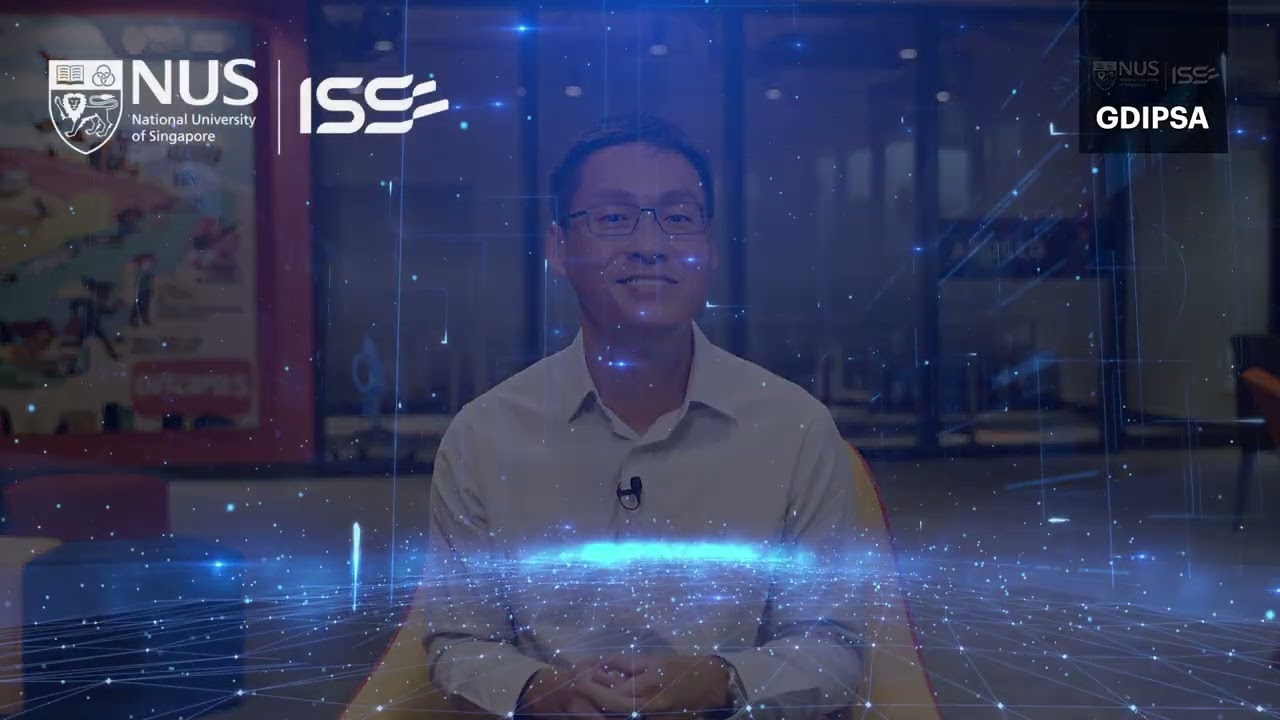
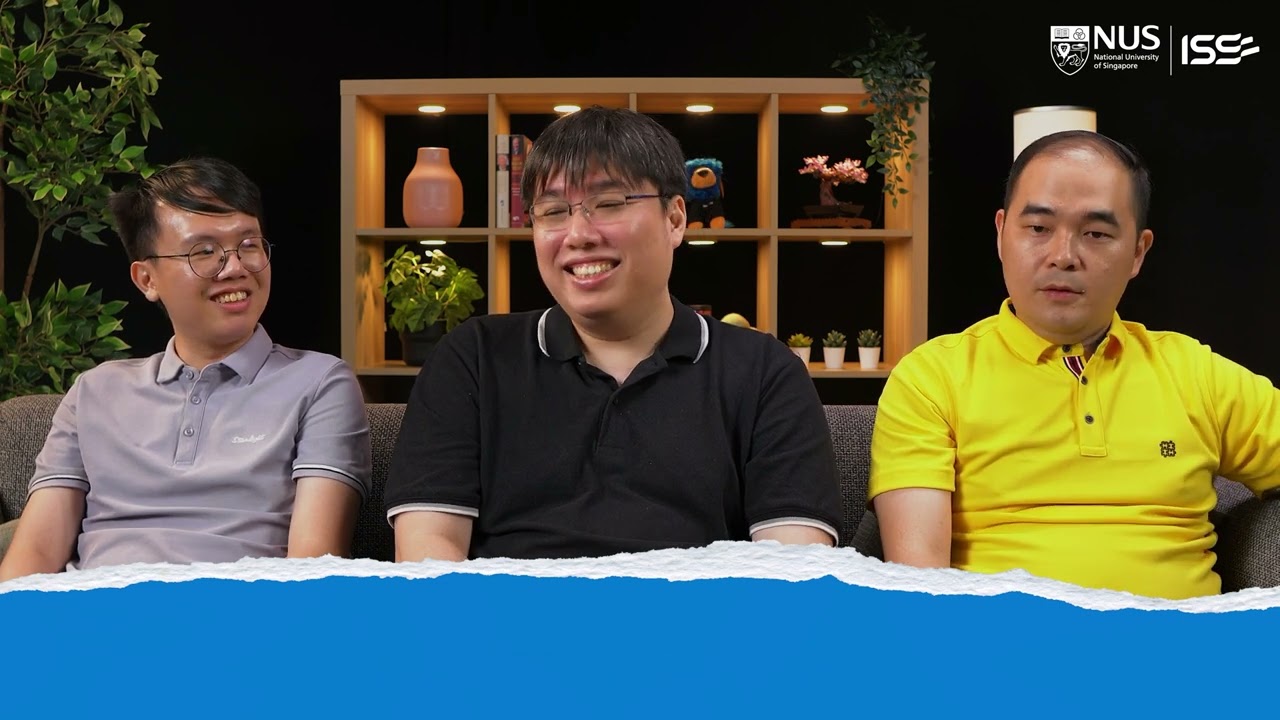

The first and primary reason for choosing this programme was my interest in computer technology, and NUS-ISS’ graduate programme allows an arts student like me to cross over into computer science. Taking this course will allow me to gain relevant IT knowledge and skill set before I decide on my next step.”
The GDipSA is ideal for those seeking a fast, effective transition into IT. It's intensive and demanding but that's what drives real transformation. If you're serious about a career change, it's worth the effort.”
GDipSA is intense but incredibly rewarding. It is not a walk in the park but the hard work put in and the knowledge gained will be immensely valuable”
The GDipSA programme provided a strong balance of academic rigour and industry-focused training, equipping me with both the theoretical foundation and practical skills to deliver real-world software projects.”
Our GDipSA students come from diverse academic backgrounds across multiple disciplines.




Projects and internships provide opportunities for students to put into practice what you have learnt in the classroom, making your ideas come to life in the real-world.
Students will design and develop a full-stack Java enterprise web application using frontend technologies (HTML, CSS, JavaScript), a Java Spring Boot backend, and a relational database implemented with SQL.
Students will work on a realistic, simulated case study to experience the Application Development Life Cycle (ADLC) from idea to design-ready specification.
Students will experience how the project team packages and delivers software in a structured way - similar to how companies release updates.
Students will build a simple image recognition system that can classify img into categories. They'll also learn how to prepare img for training and improve their results using common techniques.
Students will work with real datasets and build different machine learning models to compare results and make observations about model performance.
Students will build an end-to-end application with an Android mobile app and backend services, enhanced with AI features (and a simple AI "agent" workflow). The result is a modern, real-world style solution: mobile + backend + AI.
This is the final team project that brings everything together. Students will work like a real project team — planning, building, integrating, and presenting an end-to-end solution.
During your 5-month internship, you will develop the versatility and flexibility to handle the unpredictable challenges of user requirements, project schedules and end product expectations of any real-life project.
The 5-month internship is a crucial and prized component of the GDipSA programme. Here, students are assigned to companies to work in real-life settings. Students develop the versatility and flexibility to handle the unpredictable challenges of user requirements, project schedules and end-product expectations of any real-life project. They will learn to adapt quickly to new working cultures, pick up new technical skills and domain knowledge where required, and propose feasible IT solutions, develop and deliver them to the satisfaction of users.
Past internship companies our students have worked in include Accenture, Integrated Health Information Systems (IHiS), StarHub, OCBC Bank, IBM and more.
GDipSA students must complete all the Graduate Certificates as well as a Capstone Project and Internship.

This course brings the learner through a dynamic world of creating robust and scalable web applications using the Java programming language. This course is designed for both beginners and experienced Java developers who want to expand their skills into the realm of web development. It includes technology to build full stack web development with extensions to access and manipulate data and over the cloud platform.
Learn More
This course introduces the art and science of crafting data-driven software solution that addresses users’ needs and solves business problems. It uses design principles to define architecture, components, interfaces and data for a robust and scalable software solution for the cloud platform. It also incorporates agile practices and techniques in the design process so to allow iterative, flexible and adaptive development.
Learn More
This course provides a comprehensive curriculum for aspiring data scientists and machine learning developers. Through practical modules and hands-on exercises, participants will develop essential skills in Python and machine learning techniques.
Learn More
This comprehensive course equips students with the skills needed to become proficient full-stack mobile application developers. Covering both client-side and backend development, students will learn the essential tools, languages, and frameworks required to build robust and user-friendly mobile applications.
Learn More
In this course, you will learn how to create a comprehensive and efficient software delivery pipeline that not only delivers features quickly but also ensures the security and reliability of both software and machine learning components.
Learn More
This course includes the capstone project that links up all the concepts taught in the NUS-ISS Graduate Certificate in Digital Solutions Development – Web Applications, Design, Mobile Applications, Machine Learning Applications and Agile Software Delivery. It also includes an internship programme where you will develop and propose IT solutions for your assigned internship company.
Learn More
This course brings the learner through a dynamic world of creating robust and scalable web applications using the Java programming language. This course is designed for both beginners and experienced Java developers who want to expand their skills into the realm of web development. It includes technology to build full stack web development with extensions to access and manipulate data and over the cloud platform.
Learn More
This course introduces the art and science of crafting data-driven software solution that addresses users’ needs and solves business problems. It uses design principles to define architecture, components, interfaces and data for a robust and scalable software solution for the cloud platform. It also incorporates agile practices and techniques in the design process so to allow iterative, flexible and adaptive development.
Learn More
This course provides a comprehensive curriculum for aspiring data scientists and machine learning developers. Through practical modules and hands-on exercises, participants will develop essential skills in Python and machine learning techniques.
Learn More
This comprehensive course equips students with the skills needed to become proficient full-stack mobile application developers. Covering both client-side and backend development, students will learn the essential tools, languages, and frameworks required to build robust and user-friendly mobile applications.
Learn More
In this course, you will learn how to create a comprehensive and efficient software delivery pipeline that not only delivers features quickly but also ensures the security and reliability of both software and machine learning components.
Learn More
This course includes the capstone project that links up all the concepts taught in the NUS-ISS Graduate Certificate in Digital Solutions Development – Web Applications, Design, Mobile Applications, Machine Learning Applications and Agile Software Delivery. It also includes an internship programme where you will develop and propose IT solutions for your assigned internship company.
Learn More
Our projects span across the latest technology in IT.
View a sample of projects done by our GDipSA students.

The program includes terms, curriculum, deliverables and assessments.
| Term | Curriculum | Assessment |
|---|---|---|
| Term 1 (Feb – early May) |
NUS-ISS Certificate in Digital Solutions Development
|
|
| Term Break | ||
| Term 2(May – mid Jul) |
NUS-ISS Certificate in Digital Solutions Development
|
|
| Term Break | ||
| Capstone Project (Aug) |
End-to-end software development life cycle | Project (100%) |
| Internship (Sept– Jan) |
Internship Preparation On-Site Internship with external organisation |
Continuous monitoring of project progress and individual performance Project, presentation & report (100%) |
| Term 1 (Feb – early May) | |
|---|---|
| Curriculum |
NUS-ISS Certificate in Digital Solutions Development
|
| Assessment |
|
| Term Break |
|---|
| Term 2 (May – mid Jul) | |
|---|---|
| Curriculum |
NUS-ISS Certificate in Digital Solutions Development
|
| Assessment |
|
| Term Break |
|---|
| Capstone Project (Aug) | |
|---|---|
| Curriculum | End-to-end software development life cycle |
| Assessment | Project (100%) |
| Internship (Sept– Jan) | |
|---|---|
| Curriculum |
Internship Preparation On-Site Internship with external organisation |
| Assessment |
Continuous monitoring of project progress and individual performance Project, presentation & report (100%) |
| Term | Curriculum | Assessment |
|---|---|---|
| Term 1 (Aug – early Nov) |
NUS-ISS Certificate in Digital Solutions Development
|
|
| Term Break | ||
| Term 2 (Nov – mid Jan) |
NUS-ISS Certificate in Digital Solutions Development
|
|
| Term Break | ||
| Capstone Project (Feb) |
End-to-end software development life cycle | Project (100%) |
| Internship (Mar – Jul) |
Internship Preparation On-Site Internship with external organisation |
Continuous monitoring of project progress and individual performance Project, presentation & report (100%) |
| Term 1 (Aug – early Nov) | |
|---|---|
| Curriculum |
NUS-ISS Certificate in Digital Solutions Development
|
| Assessment |
|
| Term Break |
|---|
| Term 2 (Nov – mid Jan) | |
|---|---|
| Curriculum |
NUS-ISS Certificate in Digital Solutions Development
|
| Assessment |
|
| Term Break |
|---|
| Capstone Project (Feb) | |
|---|---|
| Curriculum | End-to-end software development life cycle |
| Assessment | Project (100%) |
| Internship (Mar – Jul) | |
|---|---|
| Curriculum |
Internship Preparation On-Site Internship with external organisation |
| Assessment |
Continuous monitoring of project progress and individual performance Project, presentation & report (100%) |
The tuition fees for the Graduate Diploma in Systems Analysis (GDipSA) are subsidized by the Singapore government through the Ministry of Education (MOE) for Singapore Citizens (SC) and Permanent Residents (PR).
The tuition fees for Academic Year 2025/2026 for the above MOE-subsidised programmes are published on Registrar's Office website here. Tuition fees are reviewed yearly and thus, subjected to revisions.
Notes:
Miscellaneous fees are typically levied on items that are either not covered or partially covered by tuition fee and grant/subsidy. All students, whether registered on a full-time or part-time basis, are charged the mandatory miscellaneous fees. These are due at the same time as the tuition fees. These fees help defray the costs of student activity, health services and insurance, campus shuttle service and other services.
Any queries about fees and payment, please contact us at issfinance@nus.edu.sg.
Students who require financing for their tuition fees may apply for the following:
Read up more on the above loans and subsidies
The program includes terms, curriculum, deliverables and assessments.

All applicants applying for Academic Year 2025/26 Semester 1 (August 2025) onwards are required to submit an online application for our graduate coursework programme (through-train) through GDA3.
It will take you about 30 minutes or more to complete your application. You will need the softcopies of the supporting documents for your online application.
Click here for the supporting documents to be uploaded and additional information required.
GDipSA Alumni can apply to NUS-ISS Master of Technology programmes through the following pathways:
| Grade Point Average (GPA) attained in GDipSA |
| Entry Pathway to Master of Technology | |
| GPA <3.5 | Not Applicable |
| |
| GPA >=3.5 | Student meets the pre-requisites for the programme* |
| |
| GPA >=3.5 | Student does not meet the pre-requisites for the programme* |
| |
| For Master of Technology in Enterprise Business Analytics | |||
| GPA >=3.5 | Student with at least 2 years of relevant working experience* |
| |
| GPA >=3.5 | Student without 2 years of relevant working experience* |
| |
Note: Students who obtain admission into the MTech Software Engineering may request to be exempted from the Software Analysis and Design and Essential Practices for Agile Teams courses in the Designing Modern Software Systems GradCert. The net applicable fees for the MTech programme will be reduced to exclude the fees of the exempted courses; subsidies will also commensurate with the net applicable fees for the programme.
[1] Subsidies do not stack. The student will receive the highest subsidy for which they are eligible. The alumni subsidy may be less than existing subsidies.
Applicants must possess the following pre-requisites:
(*) English Language Proficiency
Applicants who graduated from universities where English is not the medium of instruction should submit TOEFL (Test of English as a Foreign Language) or IELTS (International English Language Testing System) score as evidence of their proficiency in the English language.
^Institution code of NUS-ISS for TOEFL is 2432
* Applicants taking the TOEFL iBT from 21 January 2026 onwards will continue to be assessed on the 0 - 120 grading scale.
TOEFL and IELTS are only valid for two years after the test and the validity should not expire before the beginning of the application period for the coursework programme. NUS only accepts TOEFL iBT scores from a single test date, not MyBest scores. TOEFL iBT Home Edition is not accepted.
All applicants are required to take an aptitude test. Shortlisted applicants will also need to attend an interview.
No printed copies of course materials are issued.
Participants must bring their internet-enabled computing device (laptops, tablet etc) with power charger to access and download course materials.
If you are bringing a laptop, please see below for the tech specs:
| Minimum | Recommended | |
| Processor | 4-core Intel i5 (Win/Mac) or M1 (Mac) | 4-core Intel i7 (Win/Mac) or M1 and above (Mac) |
| Memory | 8GB | 16GB |
| SSD | 512GB (PCI) | 512GB (NVMe) |
| Display | FHD | FHD |
| Others | Wi-Fi ready and Web-Cam | Wi-Fi ready and Web-Cam |
Singapore’s IT sector offers multiple pathways, from technical specialisation to management roles. Beyond technical skills, employers value adaptability, a growth mindset, and the ability to learn quickly.
Our internship partners often extend job offers to high-performing interns, and graduates leave the programme with strong problem-solving and critical thinking skills that make them highly competitive in the industry. The NUS-ISS Career Services Office helps students to match jobs based on their skills and experience. There will be bi-yearly Career Fairs held for students and graduates to network with employers. However, successful employment will depend on employers.
Career Prospects









Where GDipSA Alumni Work











Interested to learn more? Fill in the form below to download the programme brochure or be contacted by a NUS-ISS personnel.
Your enquiry has been received.
A NUS-ISS representative will be in touch with you shortly.